Teaching racial justice within racism comfort

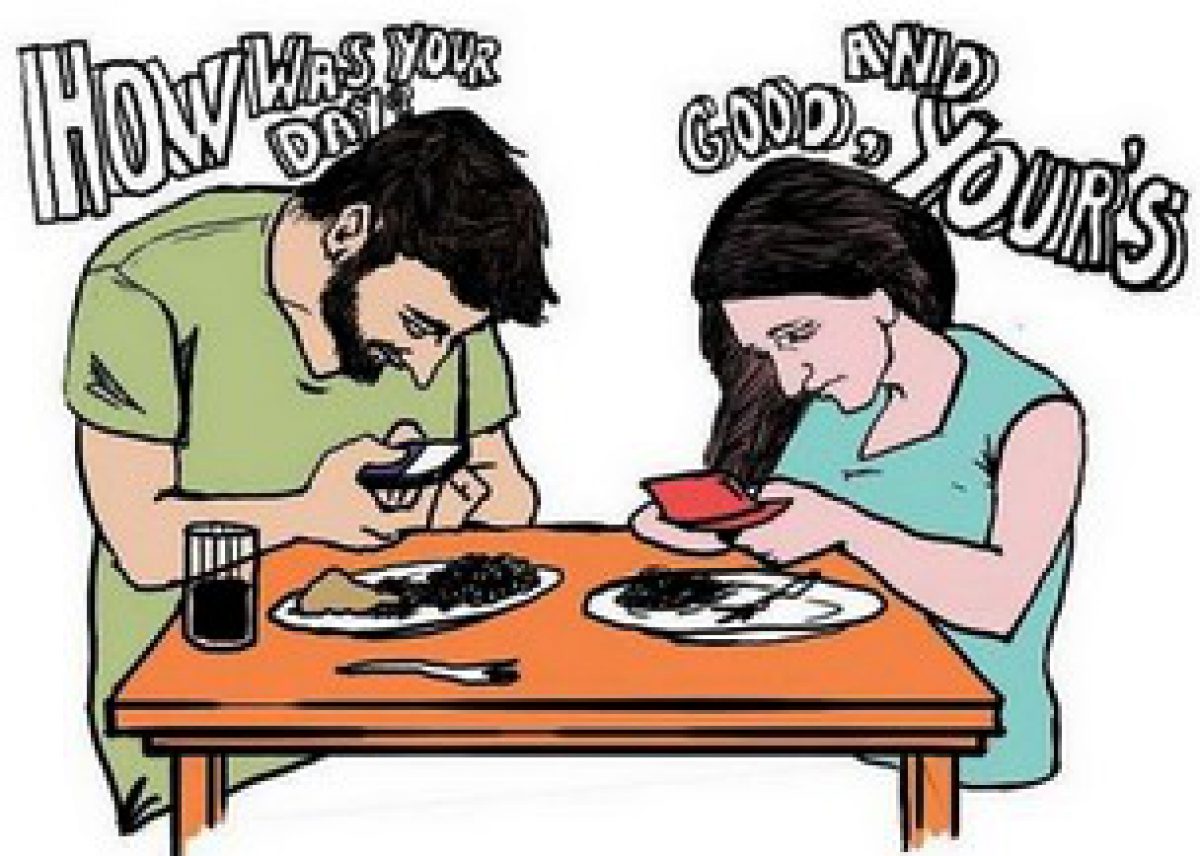
Studies on the use of the narrative modeling approach for addressing race in the college classroom suggest that one of the reasons for the success of this approach is that discussion centered approaches to learning about race allowed students to own and share their own discomfort with the topic.

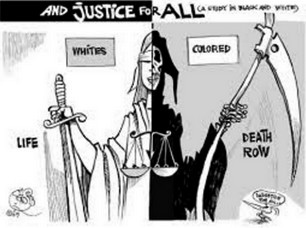
From USA to Europe via India, the racial justice is a sadness reality. Ones who lie in their place of privilege don’t see that situation. It’s worse than Lazarus and the rich of the Bible. The deep gulf is established between them(Luc 16,20).

Wherever you turn over this,the poor’s voice is inaudible and he has no name. He is colored, black, african… How to plead for him? Here are some answers of Daily Theology(DT).

Long-time education theorist Stephen Brookfield suggests that educators need not shy away from their own struggles with race, but instead should be honest and open with their students.

He recommends an approach in which teachers recognize their own subtle, embedded racist beliefs by addressing five key questions: 1) How have we learned racism from dominant ideology? 2) How do our racist impulses continue to manifest themselves in our actions? 3) What are the ways we can identify these? 4) How are our racist leanings interrupted by disruptive experience? 5) How do we challenge and push back against them?[3]

By beginning with narrative disclosure – instead of presenting students with a lot of information on race and racism – the professor perhaps can begin to foster a sense of community in the classroom that will create space for the hard discussions.

Courses that regularly incorporate student discussion into class time often have better success in creating a classroom environment conducive to open and honest discussions about race.

Studies on the use of the narrative modeling approach for addressing race in the college classroom suggest that one of the reasons for the success of this approach is that discussion centered approaches to learning about race allowed students to own and share their own discomfort with the topic.

Here a couple of quotes from students are helpful: “‘Seeing other students with similar struggles and how they overcome their anxieties with the issues is reassuring that I too can overcome my own anxieties.’” “‘The first step towards racial-awareness is self-awareness and I need to be comfortable with being uncomfortable so I don’t run from the discomfort.’”[4]

Finally, those of us teaching in theology courses or other religious institutions have a special obligation both to address race in our classrooms and to help students deal with their discomfort.

As theologians grounded in an understanding of an innate human dignity given to all people by virtue of their creation in God’s image, we have an obligation to identify and address those things like racism that undermine human dignity.

Furthermore, as Anna Scheid and Elizabeth Vasko point out in their very good article, “Teaching Race: Pedagogical Challenges in Predominantly White Undergraduate Theology Classroms,” if our colleges are committed to educating “the whole person,” then we must be willing to deal with our students’ emotional responses as well.

By helping students give voice to the feelings they are experiencing – anger, guilt, frustration – students can more effectively deal with these complex emotions in ways that do not shut down classroom conversation.[5]Racism

These three approaches to addressing racism in classrooms are just starting points and suggestions, but the theme that connects them is crucial. Owning our discomfort when talking about race helps open up discussion about race and racial privilege that very much need to happen on college campuses.

By encouraging students to name and deal with their insecurities, we enable them to address racism in critical ways that avoid easy platitudes and recognize that there are no easy solutions.

In this way, perhaps colleges and universities can begin their own transformative process of truly being social forces for good.

By Krista Stevens, DT, Teaching racial justice in the classroom
Quand les Etats-Unis accusent le Rwanda d’allumer le feu au Burundi

S’agit-il d’accusations injustifiées ou d’un sincère avertissement d’un ami? Quoiqu’il en soit, la logique de l’accusé prouve le contraire: ceux qui ne soutiennent pas ces réfugiés, qu’ils les accueillent chez eux! Kigali ne voudraient-il plus de ces Burundais?

Ce mercredi 10 février 2016, les États-Unis ont accusé le Rwanda de chercher à déstabiliser le Burundi voisin. D’après RFI, Washington accuse Kigali d’être impliqué dans des activités déstabilisatrices pour le Burundi.

S’agit-il d’accusations injustifiées ou d’un sincère avertissement d’un ami? Quoiqu’il en soit, la logique de l’accusé prouve le contraire: ceux qui ne soutiennent pas ces réfugiés, qu’ils les accueillent chez eux! Kigali ne voudraient-il plus de ces Burundais?

Quels sont les pays partenaires qui vont les accueillir? Et si les violences continuent au Burundi, le Rwanda va-t-il fermer ses frontières comme la Turquie et la Syrie pour maintenir les réfugiés sur leur sol qui brûle?

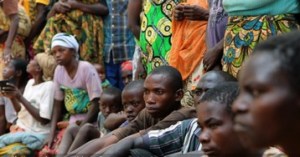
Burundi refugees

Sans espérer des réponses justes et humaines, les 75000 réfugiés burundais installés au Rwanda attendent avec incertitude mais sans surprise, les conséquences de la menace. Mais non! Diplomatie et relations internationales joueront le jeu d’apaisement.
By P.B

Villes africaines sous le choc des inondations

Presque toutes les villes pleurent leurs morts. A cause des pluies diluviennes, les infrastructures délabrées sont transformées en rivières.

Certaines villes africaines attendront beaucoup de l’Accord universel sur le climat. Elles attendront qu’il parvienne à résorber les malheurs chroniques qui les assaillent; qu’il établisse un équilibre vital entre les capitales et les villes aux bidonvilles.

Comme si elles étaient sur une autre planète,elles attendront longtemps. Le choc des inondations montrera quand ces bidonvilles auront « droit au développement ».

Les habitants de ces villes n’ont-ils pas « droit à la santé » promu dans le Préambule de cet Accord? Voyons-en les pertes humaines restées en laisse et nous saurons s’il y a urgence des mesures vraiment efficaces et adéquates.

En République Démocratique du Congo

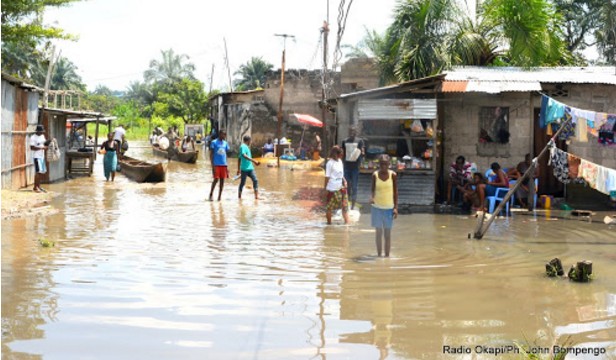
Kinshasa inondations

Presque toutes les villes du pays pleurent leurs morts. A cause des pluies diluviennes, les infrastructures délabrées sont transformées en rivières. Même la capitale Kinshasa, longtemps rayonnante, se fait l’honneur de naviguer dans la boue.

C’est comme si tout l’Océan Pacifique venait la visiter à l’improviste, via Matadi. Plus de 31 morts sont déjà recensés.

Bukavu inondations

A l’Est, Sud-Kivu, l’accusé ne sera pas condamné. Les constructions en désordre jouent les circonstances atténuantes. Les pluies n’ont que déclenché l’effondrement. Elles ont entrainé 18 morts à Bukavu et 8 à Kalehe.

Seul Kisangani n’a que 468 maisons inondées, dans le quartier Boyoma, commune Makiso. Mais, selon la même source, les communes de Mbanza-Ngungu, Boma, Kabondo n’ont pas échappé à l’ire de la rivière Kalamu. Ainsi, ce 12 décembre 2015, Congo Central comptait 9 morts.

En Tanzanie

Tanzanie inondations

Les fortes pluies mêlées de grêles et de vents violents ont frappé le nord de la Tanzanie. Il y eut 38 morts dans le District de Kahama, région de Shinyange, au sud du lac Victoria. 82 personnes sont blessées et 3500 affectées par ces intempéries.

Au Madagascar

Madagascar

Antananarivo, la capitale de Madagascar, et d’autres villes, sont menacées. Les infrastructures ne résistent plus à la montée des eaux. Outre les tempêtes  et les cyclones, les pluies abondantes ont fait 19 morts et 60 000 sinistrés.

Au Malawi

Malawi inondations

Cette année 2015, Lilongwe, la Capitale de Malawi, n’a pas eu de répit. Plus de 176 personnes sont mortes, 153 disparues ,englouties par les inondations. A Chilobwe non loin de Blantyre, la capitale économique, on y a retrouvé 4 corps inanimés. 200000 déplacés sont sous la perfusion des aides internationales.

Au Rwanda

Huye inondation

Alors qu’il est souvent secoué par la sécheresse, le District de Huye(ancienne préfecture de BUTARE)a été foudroyé par les pluies torrentielles. Dans la nuit du 11 décembre 2015, la vague des eaux a ravagé la Cellule de Sovu en passant par Gahenerezo et Rwamabuye de Mbazi.

Selon les autorités locales, on a dénombré 3 morts dont un enfant de deux ans et plusieurs dégâts matériels. Dans d’autres Districts du pays des Mille collines, on a dénombré 31 morts, 57 blessés et 933 foyers gravement affectés par les fortes précipitations.

Les États et les gouvernements devront faire plus d’efforts pour que ces populations retrouvent et mènent une vie digne.

P.B

When 50% of Burundians, Eryteans, Malagasiers and Rwandese will be shortest people in Africa

In some African countries, stunting is so prevalent that, considering the statistics today, 2030 almost half of the young adult population will be shorter than they should be.

Instead of some encouraging results, levels of hunger in the developing world have declined by more than one-quarter since 2000, there are still some big shocks – 795 million people still go hungry and more than one in four children are affected by stunting.

In a Nutrition Overview, the World Bank explains how undernourished children are more likely to die in the first few years of life. If they survive, they have lower educational and income attainment. Similarly, stunted children are more likely to start school later, perform more poorly on cognitive functioning tests, and are more likely to drop out of school.

Studies also showed that adults who are stunted as children earn 20% less than comparable adults who were not stunted and are 30% more likely to live in poverty and less likely to work in skilled labour. Thus, the economic costs of undernutrition, in terms of lost national productivity and economic growth, are significant – ranging up to 11% of the GDP in Africa each year.

In some African countries, stunting is so prevalent that, considering the statistics today, 2030 almost half of the young adult population will be shorter than they should be.

Looking at the B>four worst performers – Burundi, Eritrea, Madagascar and Rwanda – while the Global Hunger Index didn’t go into reasons why they performed so badly, here’s a quick analyses of why almost half of the population is just not as tall as it should be:

Burundi

Bwaki Burundi

Burundi has a very densely packed population. The vast majority rely on agriculture and are very vulnerable to climate hazards. Limited land access and limited crop diversity means that rising costs of food will affect nearly everyone, for example, the price of beans increased by nearly 50% in recent years – and the average household now spends over 70% of its income on food.

Another contributing factor is poor infant-feeding practices during an important transition period to a mix of breast milk and solid foods between six and nine months of age. In Burundi almost one in eight children are not fed appropriately with both breast milk and other foods.

Eritrea

Bwaki Erythrée

In Eritrea low land productivity is a key factor in stunting. Currently, the cultivated area is estimated at just 672,000 ha of which over 90% is under rained subsistence farming using traditional systems. Generally yields are very low and crop failures occur on average from 1 in 3 years to 1 in 5 years due to frequent erratic rainfall. Severe land degradation further reduces the land’s productivity. The total livestock population is high but productivity is low due to shortages of feed and water, and problems with pests and diseases.

Stunting is also attributed here to unsafe water and poor sanitation; access to sanitation in rural areas stands at 14%, which contribute to repeated diarrhea diseases leading to malnutrition.

Madagascar

Bwaki Madagascar

In Madagascar the driving force of stunting is a lack of money. About 76.5% of the population lives in poverty, this means that most people are unable to afford adequate nutrition. Children’s diets typically consist of only rice and root vegetables suffer from malnutrition.

Although many children consume enough calories, they have trouble growing because their diet consists almost exclusively of rice, to which cassava or a salty soup may be added and, if the family has enough money, some fatty meat.

Rwanda

Bwaki

A key issue for Rwanda’s stunting problem relates to the mothers and their lack of education on feeding and weaning. Though rates of stunting has decreased over time, the mothers’ levels of education have a clear inverse relationship with the prevalence of stunting.

Also, again relating to the mother, when pregnant women do not have appropriate nutritional intake during pregnancy, and children do not receive the foods, feeding and care required for normal growth during their first two years chronic malnutrition occurs.

Data on Rwanda shows the situation of child stunting in 2013 remained serious with the highest rates (58%) among children 6-18 months of age. Almost 15% were found to be stunted at two months which indicates a poor growth of the foetus during pregnancy.

P.B

Source: By 2030 about 50% of Burundians..